2.5 KiB
| locale | title | slug | date | city | tags | country | thumbnail_square | thumbnail | gallery | ||||
|---|---|---|---|---|---|---|---|---|---|---|---|---|---|
| en | From Paraguay, Jerusalem Projected as the Axis of the Future Global Political System | 2026-02-26-from-paraguay-jerusalem-projected-as-the-axis-of-the-future-global-political-system | 2026-02-26 | Asunción |
|
PY | https://ik.imagekit.io/crpy/photo_2026-05-05_12-41-04.jpg?tr=w-500,h-500,c-crop,ar-1:1 | https://ik.imagekit.io/crpy/tr:w-1280/photo_2026-05-05_12-41-04.jpg |
|

From Paraguay, Jerusalem Projected as the Axis of the Future Global Political System
The analysis outlines a transformation in international governance, with Jerusalem as its institutional center.
Asunción, Paraguay – February 26, 2026
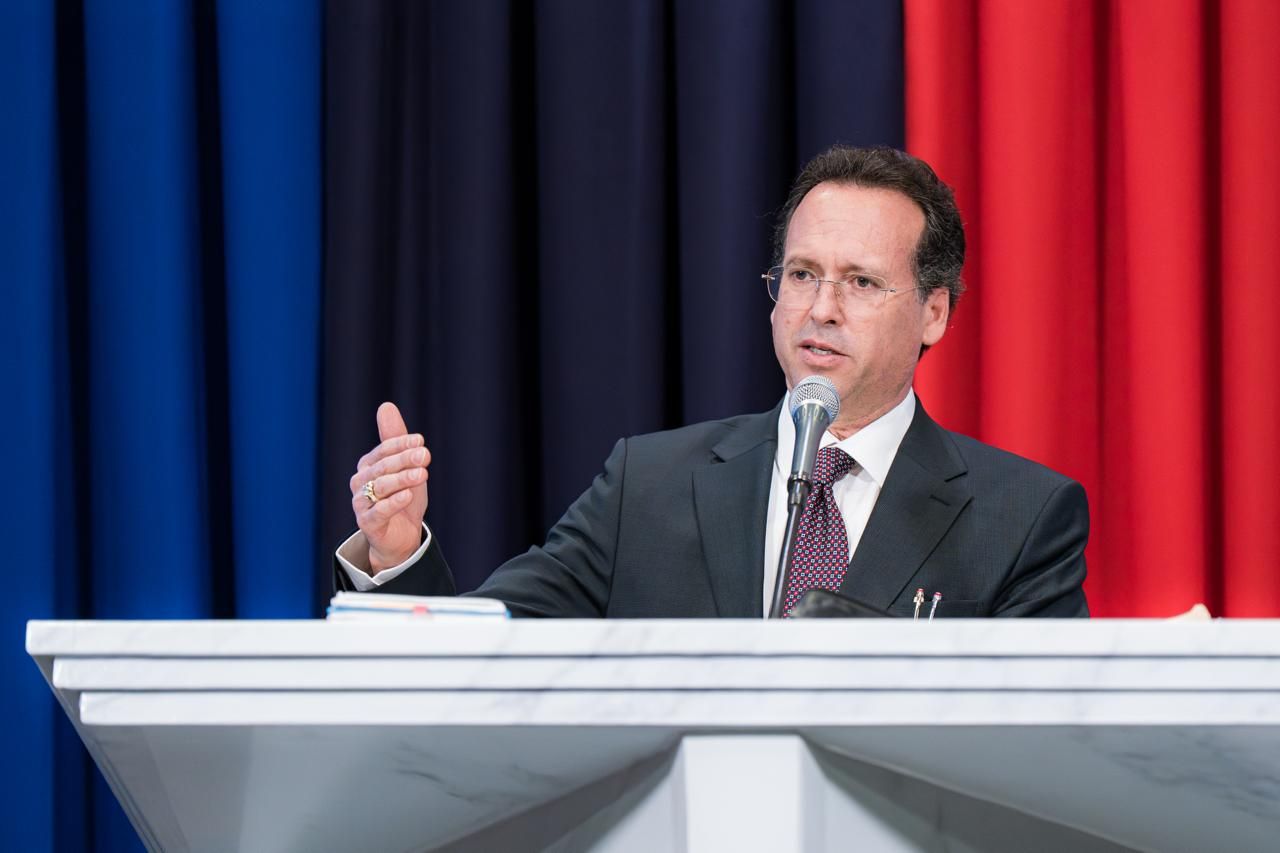
In a recent statement, Dr. José Benjamín Pérez Matos presented an assessment on the evolution of the international political system, highlighting the central role that, according to his view, Jerusalem will occupy in the configuration of the future global order.
During his address, the president of the Kingdom of Peace and Justice Center argued that the city of Jerusalem not only retains historical and symbolic relevance, but is emerging as a cornerstone in the structure of international governance.
In this context, he stated: “It will be the capital of the entire planet Earth,” underscoring its centrality in the coming order.
The statement also included a direct reference to the organization of the global normative system, asserting: “The law shall go forth from there,” an allusion to the concept of Jerusalem functioning as the nucleus from which juridical and administrative decisions will be structured on a worldwide scale.
Dr. Pérez Matos maintained that this scenario would entail a profound transformation in the dynamics of international relations, in which States will be required to adapt their policies and strategies in accordance with this new axis of power.
Furthermore, the analysis reinforces a line of thought previously articulated by the Puerto Rican leader, which posits the necessity for governments to reassess their diplomatic positioning regarding Israel, as part of a broader reconfiguration of the global order.
The statement presented from Asunción projects a long-term vision in which Jerusalem acquires a central role in the institutional architecture of the future, with direct implications for international policy and State-level decision-making.